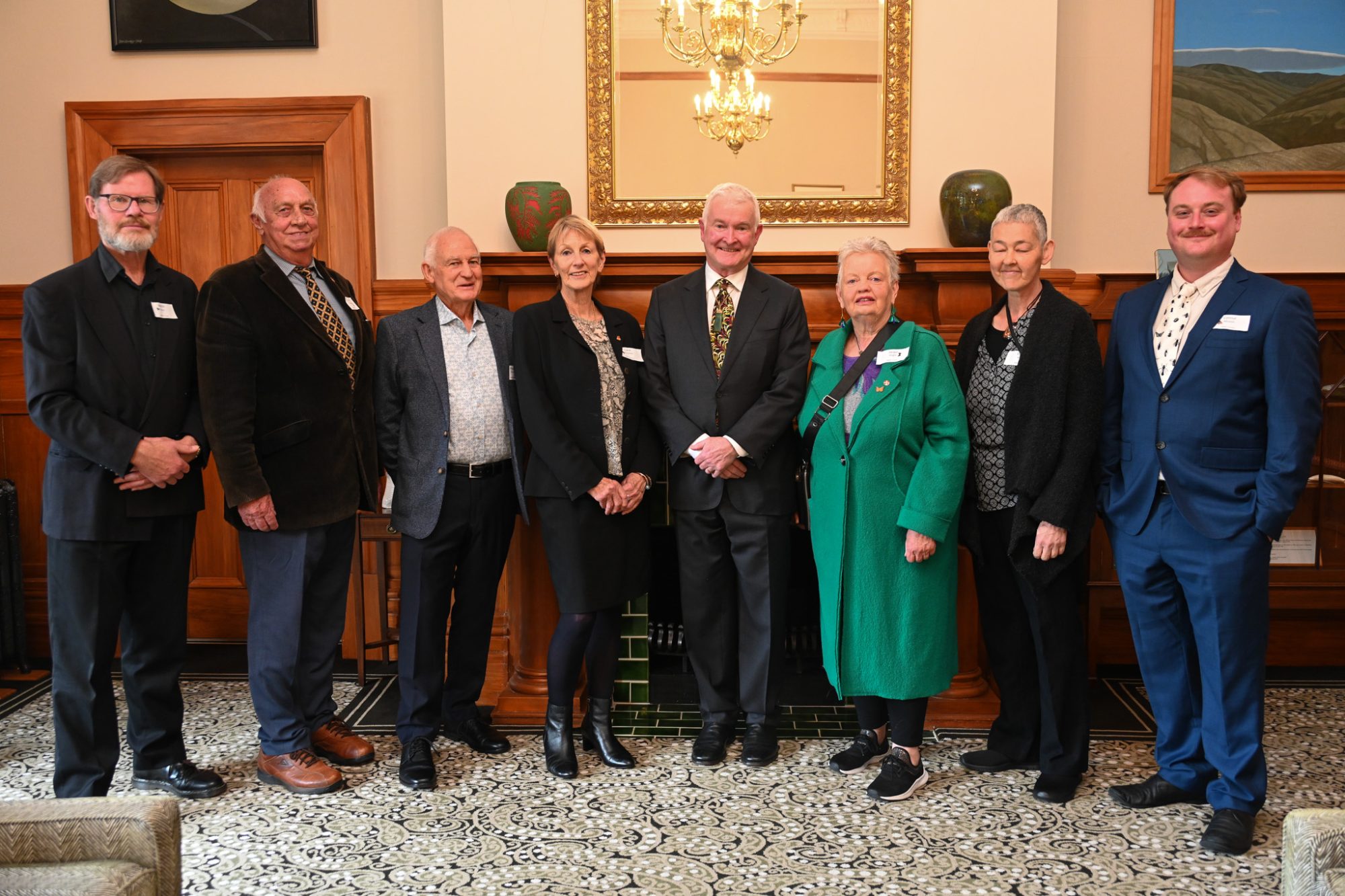
Left to right: Martin Visser, Maurice Mehlhopt, Hugh Smith, Carol Stensness, His Excellency Dr Richard Davies, Jacqui Knight, Devangi Farah and Connal McLean at Government House, Wellington, 20 October 2025
On Monday, 20 October, we were honoured to celebrate a very special occasion at Government House, Wellington — recognising their beautiful gardens as a certified Butterfly-Friendly Habitat, and marking 20 years since the Moths and Butterflies of New Zealand Trust (MBNZT) was founded.
Yes, right in the middle of Wellington — just a stone’s throw from the Beehive — lies a 12-hectare private sanctuary where butterflies and moths are actively encouraged to flourish. It’s a wonderful example of how thoughtful garden care can make space for nature, even in our busiest cities.
“New Zealand’s beautiful butterflies and moths are struggling because of development, pesticide use and introduced wasps,” said Maurice Mehlhopt, Chair of MBNZT. “We are thrilled to be adding Government House to our list of gardens and habitats that foster flowers for nectar and host plants for Lepidoptera.”
His Excellency Dr Richard Davies expressed his delight at the recognition, pleased Government House grounds provide a safe environment for Lepidoptera.H He said that he hoped this recognition by MBNZT will encourage more people to create a similar haven in their own gardens.
For more than 25 years, Bark Ltd has maintained the gardens at Government House with a strong focus on sustainability and biodiversity.
“The gardens are managed to encourage and nurture plant and insect diversity while maintaining the high standard befitting Government House,” said Andrew Jensen, Regional Manager of Bark. “We’re proud that this recognition reinforces our commitment to those values.”
Encouraging Butterfly-Friendly Spaces Nationwide
Since it began in 2009, our Butterfly-Friendly Habitat programme has celebrated landowners, schools, community groups, and councils who create and maintain high-quality environments for butterflies and moths. Certified sites display a distinctive plaque, are featured on our website, and inspire others to plant for pollinators.
To qualify, gardens must be well-established, provide shelter and sunshine, include host plants for at least three butterfly or moth species, offer nectar sources year-round, and use natural methods to manage pests.
Twenty Years of MBNZT
This year marks two decades of the Moths and Butterflies of New Zealand Trust — twenty years of community engagement, advocacy, and hands-on conservation work. Our vision remains the same: that Aotearoa New Zealand’s ecosystems will always support thriving moth and butterfly populations.
We’re proud to see that vision reflected so beautifully in the grounds of Government House — a reminder that with care, collaboration and love for nature, even our most formal spaces can hum with life.
His Excellency's speech was particularly inspirational, and is reproduced here:
Thank you for formally recognising our beautiful grounds as a butterfly and moth-friendly environment, and I welcome this opportunity to highlight the work of the Trust.
I know our gardeners are thrilled to have their work recognised in this way, and they will have opportunities to spread the message during our garden tours.
In New Zealand we take it for granted that we can so easily get out into nature and connect with the natural world. Most of us are aware of the impact of climate change, but there is not the same level of awareness about biodiversity loss, and in particular the disappearance of insect life.
We are witnessing the devastating impact of human activity on our flora and fauna. Many of the Earth’s species are critically endangered, and some experts suggest up to 25 percent of our species will be lost in the next 25 years.
Over two hundred years ago the great English poet William Blake wrote about our responsibilities to protect the natural world, including the smallest of creatures, when he said:
Kill not the Moth nor Butterfly
For the Last Judgment draweth nigh
His words might seem prescient to us here in 21st century New Zealand where we are seeing the widespread disruption of delicate ecosystems, habitat loss, the effects of pesticide use, and the predations of introduced species.
But there are also reasons for hope, and after all, the butterfly is a symbol of rebirth and hope. We are blessed to have people in our communities, people like you, who are determined to put a halt to the degradation of natural environments – and restore healthy habitats – be they wetlands, forests, streams or rivers.
Last year Dame Cindy and I visited the Chatham Islands, where the community is fully engaged in implementing ambitious programmes of environmental restoration. The islands are home to 25 percent of Aotearoa’s threatened species, and scientists are undertaking research to better understand how to best manage their conservation.
Local nurseries are growing thousands of endemic trees, and landowners, who boast the highest proportion of conservation covenants in New Zealand, are undertaking massive reforestation programmes.
During our visit, we met Lois and Val Croon, whose Admiral Farm Garden is an enchanting haven for a stand of some of those rare trees, as well as the Chatham Islands’ own Admiral butterfly species.
Here on the mainland, while there are gaps in our knowledge about our thousands of moth and butterflies species, what we can be sure of is that their presence in a garden means that they have access to the appropriate food, water and shelter for the different stages in their life cycle.
Their presence indicates that a garden has flourishing insect and microbial life, which in turn contributes to more fertile soil and flourishing vegetation. And at various stages in their life cycle, our moths and butterflies are a welcome food source for other creatures in the food chain, such as birds.
We know that conservation efforts work much better when communities get behind them.
The more people who become involved in such projects, the more we can achieve.
I hope the recognition of Government House grounds will help you promote greater awareness and encourage people to purposefully create the right conditions in their gardens to support Lepidoptera species.
I will certainly be promoting your work during our vice-regal engagements, wherever we are in Aotearoa New Zealand, and I wish you all the very best with your projects in the future.
Some photos from the event are shown below:
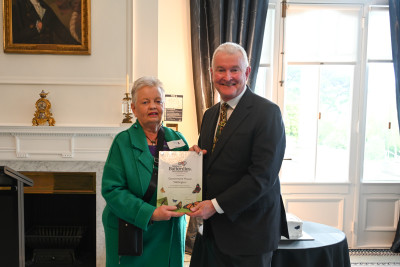
Founding trustee Jacqui Knight presents the plaque to Dr Richard Davies
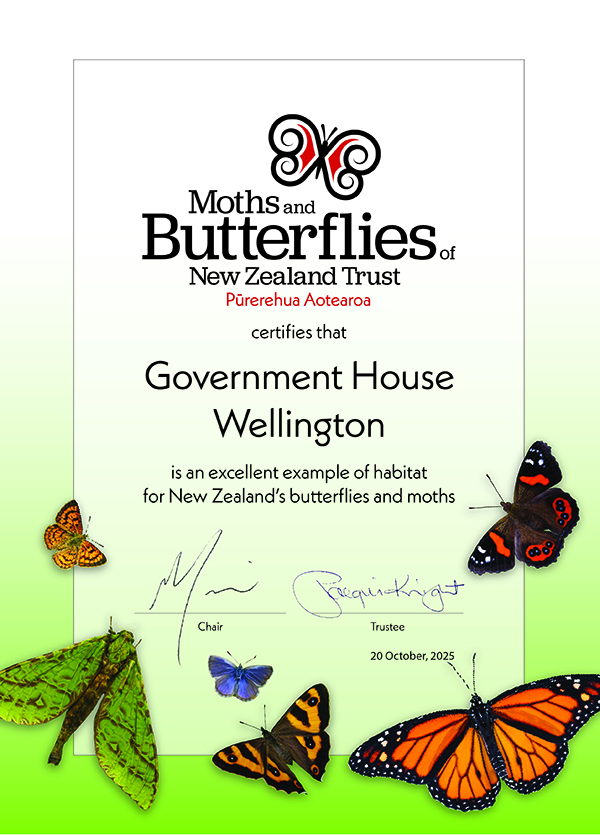
The plaque
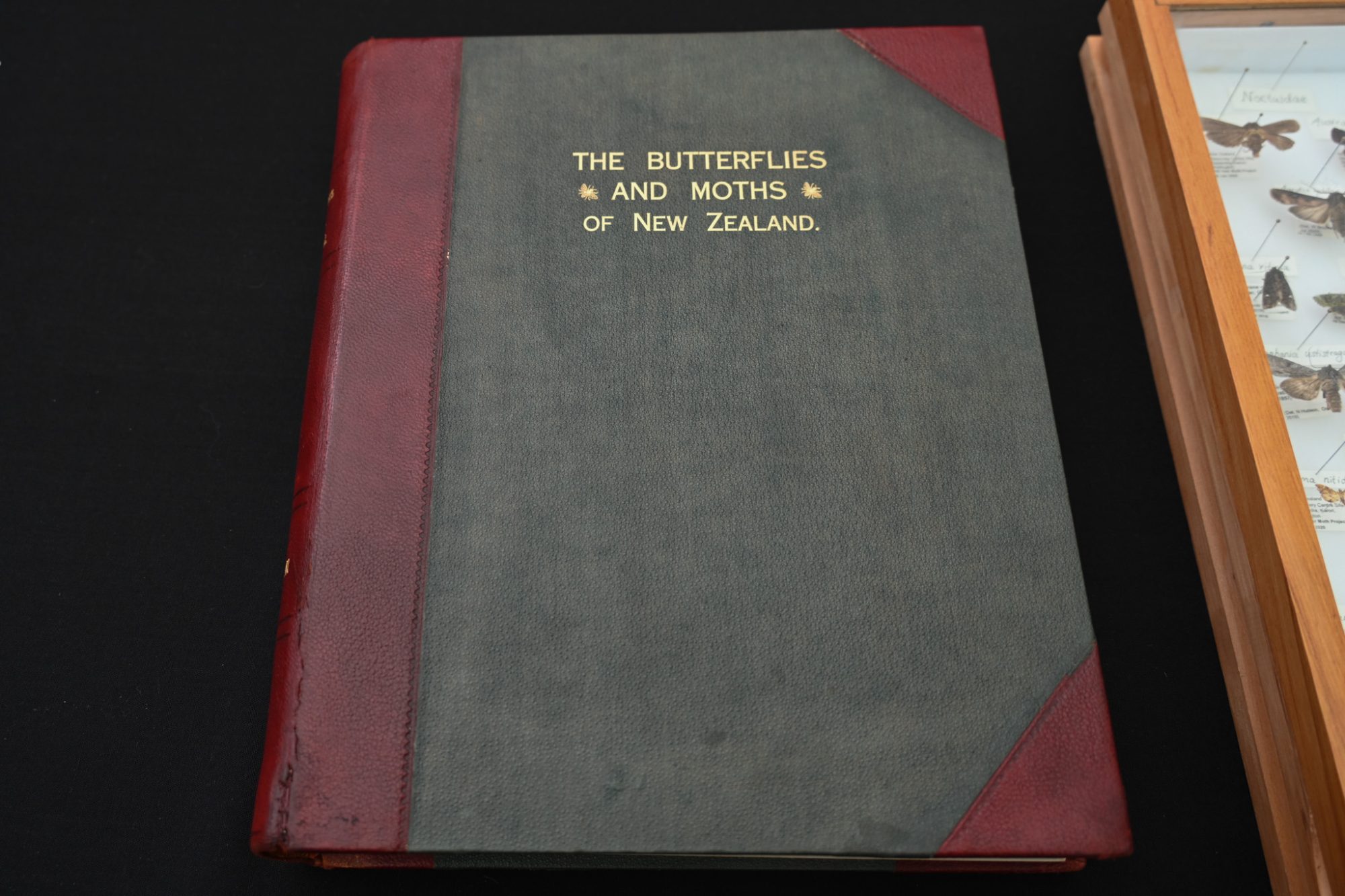
George Hudson's 1928 "The Butterflies and Moths of NZ" presented as a koha
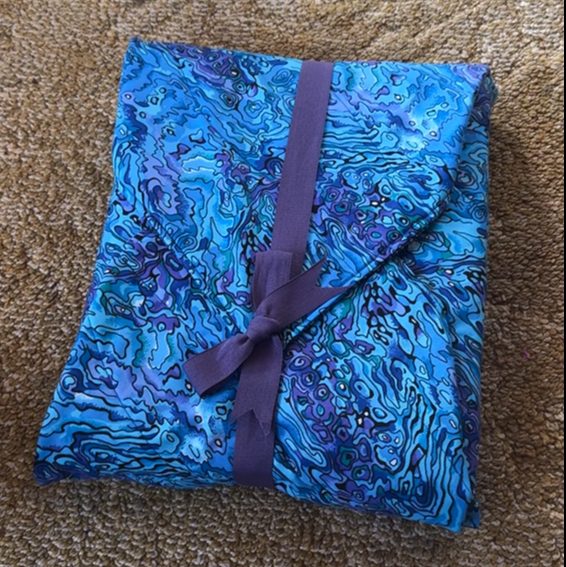
Beautiful presentation case made by Judi Ferguson
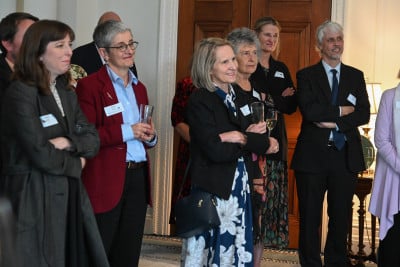
Some of the guests
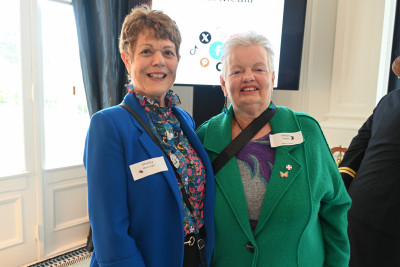
Founding trustees Shelley McGonigle and Jacqui Knight
---
Ehara taku toa i te toa takitahi engari taku toa he toa takitini
My success is not mine alone, but it is the strength of many