Monarchs need milkweeds. Aphids love milkweeds. Aphids come from nowhere (fly in, reproduce, suck the goodness out of the plant).
Aphids reproduce through a highly accelerated, adaptable cycle that alternates between asexual cloning in the spring and summer, and sexual reproduction in the autumn. This allows a single aphid to produce millions of descendants in a single season. And they are great at transmitting diseases.
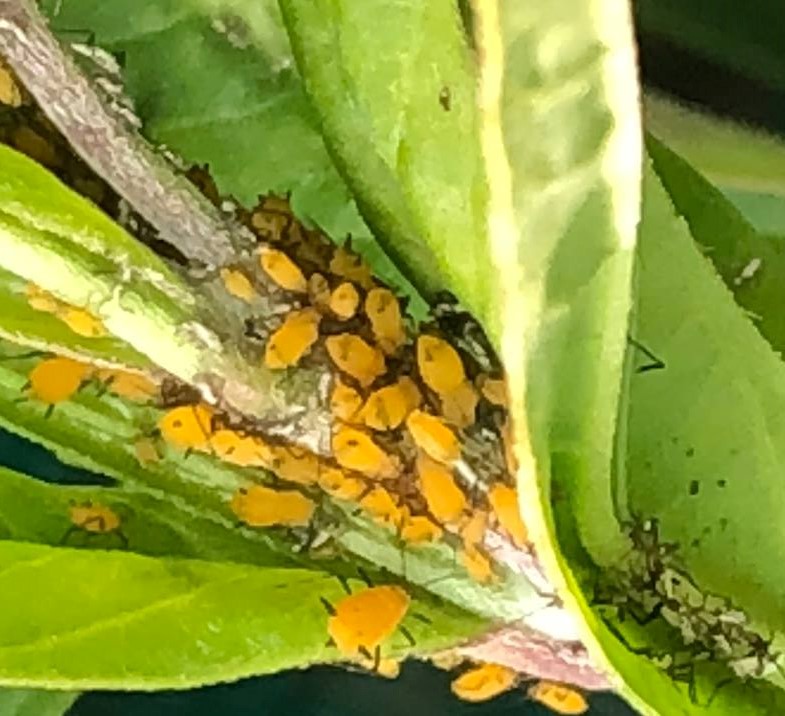
Sickly milkweed could be because of a virus, bacterial phytoplasma, or a fungal issue, frequently spread by aphids. Aphids are notorious vectors for plant viruses. While their sap-sucking causes direct physical damage (like curling and wilting), their ability to act as carriers—transmitting dozens of viruses between healthy and infected plants—poses the most severe threat to gardens and crops.
Information about the viruses that affect swan plants (milkweeds) in NZ is not documented, as it's not a commercially viable crop. But it could be one or a combination of the following:
- Asclepias yellow vein virus: a potyvirus that presents as distinct bright yellow vein banding and mottled patterns on milkweed leaves.
- Milkweed mosaic virus: A common viral disease causing yellowish/light green mottling on the foliage and sometimes stunting plant growth.
- Milkweed yellows phytoplasma. Phytoplasma is often confused with viruses. They are specialised, cell-wall-less bacteria that parasitise the phloem tissue (sap-conducting vessels) of plants. They are obligate parasites, meaning they are completely dependent on their plant and insect hosts, which makes them impossible to grow in artificial laboratory cultures. While technically a wall-less bacteria rather than a virus, it is spread by leafhoppers and causes similar symptoms like yellowing, twisted leaves, and abnormal, dense "witches' broom" shoots.
Basically, I have been growing a monoculture for several years. Swan plants in pots, twelve months of the year, all in the same place for quite a few years. It's been a haven for pests!
The plants scattered around my garden seem to be reasonably healthy (and if not, they will undergo the same treatment). But all the ones in pots are going to be disposed of, and replaced with fresh, home-grown seedlings in the spring.
Management and Control
Because viruses cannot be cured, my primary goal is to prevent them from spreading to healthy milkweed patches.
- Remove all the plants in pots.
- Put all the diseased plants and trimmings directly into a plastic rubbish bag and throw them away. I will not compost the infected material, as this can spread the disease(s).
- Dispose of all the potting mix to a new site where there's no milkweed growing.
- Soak all of the pots in a 20% bleach mix, before reuse.
I'll wash my hands with soap and water after handling everything - I don't want to transfer any disease.
And I'll continue my regime of encouraging natural predators (ladybirds, lacewings, A. colemanii) to manage aphids and leafhoppers.